Choosing the Correct Puppy or Dag - Part 02


This is second part of Choosing the Correct Puppy or Dag - Part 01 if you are no read first part it better you read it. To read it please click Here.

Breeds by Group and Characteristics


 There are many breeds that will fit any and all needs and wants your family may have. Characteristics of the breeds are just generalizations, and mixed breed dogs would be expected to possess characteristics of all  breeds contributing to their genetic makeup. Individual dogs within the breeds may not have the typical characteristics, or may display them to differing degrees. The following are different classifications of breeds, characteristics, and examples of the breeds grouped as defined by the AKC. .

Herding

 Examples: Australian Shepherd, Border Collie, Welsh Corgi (Pembroke, Cardigan), Collie, German  Shepherd Dog, Old English Sheepdog, and Shetland Sheepdog 

Characteristics: The Herding group was broken off from the Working group in 1983. They are intelligent, train easily, and make excellent  companions. They can be very protective of their families and their property.

Hound
  
Examples: Afghan Hound, Basset Hound, Beagle, Coon Hound, Bloodhound, Dachshund (short hair, long hair, wire hair), Foxhound, Greyhound, Irish Wolfhound, and Rhodesian Ridge back.

Characteristics: Hounds are known for their excellent hunting skills; they can either be sight or scent hunters. They are very active and can be very loud barkers and howlers. Hounds are devoted to tasks, can be distracted easily, and may be more sensitive to anesthetics.

Miscellaneous
  
Examples: Neapolitan Mastiff, Jack Russell Terrier, Beauceron, Black Russian Terrier, Plott, and Redbone Coonhound 

Characteristics: The miscellaneous group consists of purebreds that are not necessarily AKC registered.  They still can be show dogs, and have a variety of personalities and uses. They are recognized by the AKC as new breeds, but have not yet been categorized into one of the other groups.

Non-Sporting

Examples: American Eskimo Dog, Bichon Frise, Boston Terrier, Bulldog (American, English), Chinese Shar-pei, Chow Chow, Dalmation, Keeshound, Lhasa Apso, and Poodle

Characteristics: The most diverse group of fully recognized breeds, the non-sporting group is made of breeds that don’t clearly fit in any other group. Breeds come in a variety of sizes, coat colors, and  personalities. There are representatives in this group of breeds with a variety of uses (hunting, guarding, lap  dogs).

Sporting
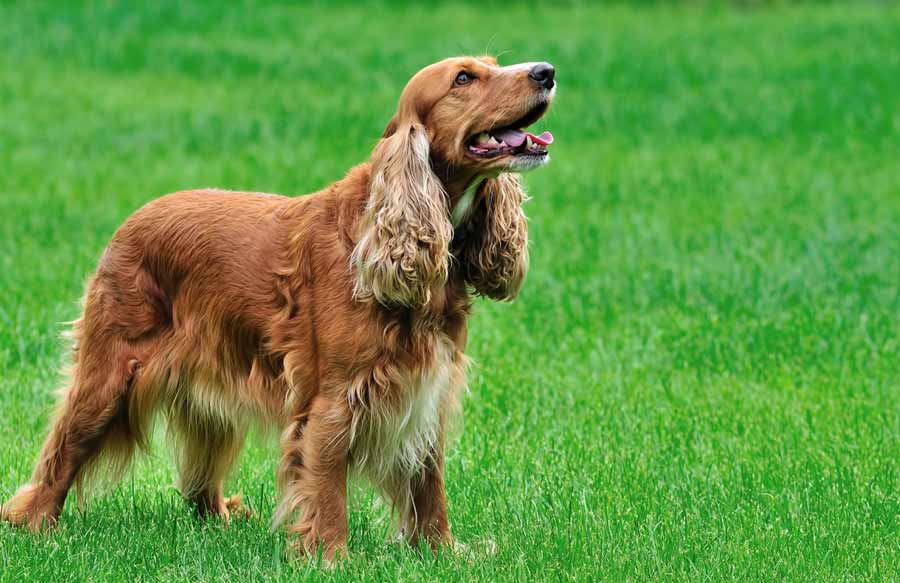

Examples: Pointers, Retrievers (Golden, Labrador, Chesapeake Bay), Setters (English, Gordon, Irish), Spaniels (Brittney, Clumber, Cocker, Springer), and Weimaraner

Characteristics: High energy levels, high endurance, very alert, and moderate obedience levels characterize  the sporting breeds. These dogs require lots of exercise, and they are not the best dog for apartments, or for  people who are not active.

Terrier

Examples: Airedale Terrier, Staffordshire Terrier (Bull, American), Bull Terrier, Fox Terrier, Miniature  Schnauzer, Scottish Terrier, Welsh Terrier, and West Highland White Terrier 

Characteristics: Terriers are  feisty and energetic and tend to have little tolerance of other animals. They were
originally bred and used to hunt vermin, so they are very intelligent and independent. Terriers need an active  owner who will understand their independent personalities.

Toy

 Examples: Chihuahua, Chinese Crested, Maltese, Miniature Pinscher, Papillon, Pekingese, Pomeranian, Pug, Shih Tzu, and Yorkshire Terrier

Characteristics: Toys are good dogs for apartments, city life or people who are looking for lap dogs. They can be easier to maintain because of their smaller size, although some have high grooming needs. Toys should learn basic obedience like all other dogs, failure to do so may result in a pet with a bad attitude.

Working

 Examples: Akita, Alaskan Malamutes, Bernese Mountain Dog, Boxer, Mastiff (Bull, French), Doberman  Pinscher, Schnauzer (Standard, Giant), Great Dane (Tawny, Brindle, Harlequin), Great Pyrenees, Newfoundland, Rottweiler, St. Bernard, and Siberian Husky

Characteristics: The largest group in number of breeds, working dogs are known for their herding skills, ability to pull sleds, and guard territory. They are quick to learn, intelligent, large, dominant, and strong, have  high endurance and are territorial. Good obedience training is a must because of the size and strength of the  working breeds. 

Choosing the Right Dog Within the Breed

There are many places to purchase a dog. Remember, the initial cost of the dog is only a part of the cost of  dog ownership. Reputable breeders may be harder to locate than pet stores. Genetic diseases may be more  prevalent, especially if the breeder is not discriminating. Animals at pet stores may not be in the best health  due to the stress of transportation of puppies, and the high traffic of people and other dogs. Additionally,  some pet stores do not know very much about the background of the dogs that are purchased there.  Shelters are an excellent source for a dog. Shelters have a large variety of dogs, both purebreds and mixed  breeds, and in addition to getting a good pet, you get the positive feeling of having “rescued” a dog. Be  cautious with newspaper ads. The advertised dogs are usually free or cheap, but the health and genetics of  the dog can be variable. Make sure you ask why the person is giving up the dog.

When buying a dog, take your time and look at many facilities and dogs. A good breeder will not be hasty to sell their dogs. They will be most interested in the dog’s well-being and will want to place the dog in the best home possible. The best breeders will even interview you to make sure you are prepared for a dog and  understand the responsibility. Many breeders will follow up after the purchase to check on the new member of your family. Puppies should not be sold earlier than six weeks, so do not buy one from a breeder if  offered. The breeder should have good records of the lineage, genetic tests, vaccinations, and health history  of both parents. If the parents are available, the breeder will let you see them along with their records. In  most cases, the mother, and information on the father, will be present. A good facility will have a separate  area for puppies, which is clean and sanitized. The puppies should be provided socialization opportunities  with the breeder and other animals. When handling the puppies, look for any abnormal appearance such as   unhealthy eyes, ears, or limbs.
When selecting a dog, you want to observe its behavior, and avoid extremes. Desirable characteristics  include curiosity, playfulness, and confidence. Undesirable characteristics include dominance, bullying,  apathy, excessive barking, biting, and submissive urinating. 

Two people should bring the puppy home, one to  hold the puppy in the car and the other to drive. If the new dog is an adult dog, it should be confined in a  crate when it is transported. Try to have the next few days free to let the new dog adapt to the family and  environment. Start calling the dog by its appointed name. Try not to leave it alone for more than 30 minutes  as it adjusts to its new life.

When choosing the puppy, several tests need to be done to make sure the best puppy of the litter is picked.  When choosing a dominant breed (i.e., territorial, aggressive,  controlling), ideal test outcomes should be a   little toward the submissive (i.e., shy, cautious, crouch with tail between legs). This is the opposite for  submissive breeds.

1. Hold the dog with the feet a few inches off the floor.
a. Normal (N): struggle a little and then settle down
b. Dominant (D): continue struggling, may bite and howl
c. Submissive (S): urinate or dangle

2. Hold the puppy on its back in your lap and stroke the belly while talking softly.
a. N: Struggle then settle down
b. D: Struggle, bite, and howl
c. S: Urinate, panic, totally succumb

3. Toss a ball.
a. N: Chase, play, bring it back, and let you take it away
b. D: Chase the ball, take it to a corner, growl when you try to take it away
c. S: Not react at all, or afraid

4. Crouch and call to it.
a. N: It will come over happily, confidently, and playfully
b. D: It will charge, jump, or ignore
c. S: It will hide, come cautiously, expose belly, urinate when touched

5. Test with people. When toys or other sounds are present you want the puppy to come to you even with distractions.

6. Test confidence. You want to do this test as long as the puppy is not 8-12 weeks of age because this is considered their fear period. For this test, throw an object that makes noise. A good reaction is to be  cautious, then curious. A bad reaction would be if the dog howls, bolts in fear, urinates or defecates. These dogs will tend to be fear aggressive and fearful when in unknown situations.

Preparing the House
Dogs, especially puppies and adolescent dogs, love to chew. This is an instinctive behavior and impossible to eliminate, so make sure anything that you do not want chewed is put away. Buy toys and bones to minimize chewing of your personal items. You will also need a leash, collar, bowls, food, bones, toys, beds, and  grooming supplies to prepare for the arrival of a dog. You should set up an appointment with your  veterinarian before taking the new dog home especially if you have other pets. 

Summary

As demonstrated in this paper, there is a lot to consider, and many options when adding a dog to your  family. Careful thought and selection is well worth the effort when  you bring home a dog that fits the purpose you intended, and you and the dog develop a strong and effective relationship.

Checklists
The following checklists can be used to help you select a dog, and prepare your home for the new dog.

Place of Purchase. Rate each dog visited on a scale of 1-5.
Cleanliness of facility
Dogs and puppies well socialized?
Healthy dogs and puppies?
Lineage
Papers
Parents and/or siblings seen
Breeder attitude
Personality Tests
1. Dog held with feet off floor:           N D S
2. Dog on back while stroking belly: N D S
3. Toss a ball:                                       N D S
4. Crouch and call dog:                       N D S
5, Test with people:                            N D S
6. Test confidence:                             N D S
Prepare Home 
Remove chewable
Food and Treats
Toys and Bones
Grooming supplies
Bowls and Bedding
Leash/Collar/ID tags
Veterinarian appt

source - http://www.akc.org

Cardio Exercises At Home


The workouts in which high-intensity training activities are interspersed with the low-intensity exercises are known as interval training workouts. The low-intensity activities can also be substituted with periods of rest. The various physical activities that can be incorporated in the interval training workout schedule could be running, cycling, etc. Interval training is used to increase stamina and speed for athletes; it also helps in body fat reduction, cardiovascular conditioning and improving the overall health.
Interval Training Workouts


The exercises mentioned in this article includes interval training workouts at home and also those which are performed outdoors. The interval training workouts for men and women are included:

Standard: 
It takes around 15-20 minutes to complete this workout. The workout is divided into 3 parts, i.e. warming up followed by high intensity exercise and finally cooling down. The period of warming up ranges between 3-5 minutes. One has to start jogging and gradually increase the speed; intensity of the exercise should however be kept low. In the second step, intensity of the workout is increased considerably. In this step, one has to perform high and low intensity exercises alternately for 1 minute each. This pattern of exercise need to be repeated 6 - 8 times. In the last step (cool down phase), which continues for 3-5 minutes, the intensity of exercise is lowered down gradually.

Workout for Sports Conditioning:
The following workout would help the athletes in conditioning and strengthening their body. The workout begins with a 3-5 minutes warm up (running). In the next step, one should perform a high-intensity workout followed by the low-intensity. Both the workouts need to be performed for 2 minutes each. In the third step, 30 second high and low intensity exercises need to be performed alternately. The cycle should be repeated 4 times. Next step in the process can really test our stamina. During this step, one has to take a 60 yard sprint followed by 90 seconds rest. This pattern of exercise need to be repeated 6-8 times. The conditioning workout should conclude with a cooling down exercise which lasts for 3-5 minutes.

Workouts for Beginners


Those who are new to interval training should keep in mind that it is a demanding physical activity. One should work in his limits and enhance the performance slowly but steadily. Intensity of a workout is measured with the help of a 10 point scale known as the Rate of Perceived Exertion (RPE). The RPE level of '1' is considered as the easiest. Beginners need to go for a level that ranges between 6-7 RPE. The RPE of 9-10 is meant for those who are extremely fit. Warming up before performing a high-intensity interval workout is very important because, blood is drawn to muscles and thus, body is prepared for rigorous training.

Treadmill Workouts

One should start with 1 minute bursts of high-intensity training in the beginning. The treadmill should be set to the level of 5 mph. A zero incline should be used to perform this exercise. Those who are used to this exercise can raise the bar by setting the speed at 10 mph. After this one-minute workout, one should reduce the intensity for next 2 minutes. For these 2 minutes, the speed should be set at 2.5 mph and one should walk with ease. After this 2 minutes rest, the 1 minute workout should performed once again. The whole set of activities mentioned above, should be repeated 5-8 times.

These interval training workouts for women and men are easy to perform. One should see that he/she doesn't stretch the body more than its limit. Only after enough practice, one can think about going all-out. The interval training workouts burn more calories than any other form of exercise. This is because the twitching of muscle fibers happens quickly during the phase of high-intensity training. Thus, one should take proper care while performing these exercises.

Sigiriya

Sigiriya, in fact, should have been classed as one of the Wonders of the Ancient World, long ago, and there is now a proposal to name it as the Eighth Wonder of the world. Perhaps, it is better late than never!

Sri Lanka's ancient architectural tradition is well portrayed at Sigiriya, the best preserved city centre in Asia from the first millennium, with its combination of buildings and gardens with their trees, pathways, water gardens, the fusion of symmetrical and asymmetrical elements, use of varying levels and of axial and radial planning. Sophisticated city planning was at the heart of Sigiriya, this royal citadel of ancient fame from the days of Sri Lanka's memorable past.
The Complex consists of the central rock, rising 200 meters above the surrounding plain, and the two rectangular precincts on the east (90 hectares) and the west (40 hectares), surrounded by  two moats and three ramparts.

The plan of the city is based on a precise square module. The layout extends outwards from co-ordinates at the centre of the palace complex at the summit, with the eastern and western axis directly aligned to it. The water garden, moats and ramparts are based on an ‘echo plan’ duplicating the layout and design on either side. This city still displays its skeletal layout and its significant features. 3 km from east to west and 1 km from north to south it displays the grandeur and complexity of urban-planning in 5th century Sri Lanka.

The Sigiriya Rock


The most significant feature of the Rock would have been the Lion staircase leading to the palace garden on the summit. Based on the ideas described in some of the graffiti, this Lion staircase could be visualised as a gigantic figure towering majestically against the granite cliff, facing north, bright coloured, and awe-inspiring. Through the open mouth of the Lion had led the covered staircase built of bricks and timber and a tiled roof. All that remains now are the two colossal paws and a mass of brick masonry that surround the ancient limestone steps and the cuts and groves on the rock face give an idea of the size and shape of the lion figure.

Though traces of plaster and pigments occur all over this area, there are only two pockets of paintings surviving in the depressions of the rock face, about a 100 meters above the ground level. These paintings represent the earliest surviving examples of a Sri Lanka school of classical realism, already fully evolved by the 5th century, when these paintings had been made. Earlier the Sigiri style had been considered as belonging to the Central Indian school of Ajanta, but later considered as specifically different from the Ajanta paintings. The ladies depicted in the paintings have been variously identified as Apsaras (heavenly maidens), as ladies of Kasyapa’s court and as Lightening Princess and Cloud Damsels.

There are also remains of paintings in some of the caves at the foot of the rock. Of special significance is the painting on the roof of the Cobra Hood Cave. The cave with its unique shape dates from the pre-christian era. The painting combines geometrical shapes and motifs with a free and complex rendering of characteristic volute or whorl motifs. It is nothing less than a masterpiece of expressionist painting
The Sigiriya Gardens

The gateway to the western precinct lies across the inner moat. It had an elaborate gate-house made of timber and brick with a tiled roof. The moat is perfectly aligned with a mountain peak in the distance

Only the southern side of the garden has been excavated, leaving the identical northern half for the archaeologist of the future. In the entire Sigiri-Bim, over 200 village tanks and rural sites have been investigated.

The water gardens of the western precinct are symmetrically planned, while the boulder garden at a higher level is asymmetrically planned. The water garden displays one of the worlds most sophisticated hydraulic technologies, dating from the Early Historic Period.

This shows an interconnection of macro- and micro-hydraulics to provide for domestic horticultural and agricultural needs, surface drainage and erosion control, ornamental and recreational water courses and retaining structures and also cooling systems.
The Macro system consisted of the Sigiri Maha weva, the manmade lake with a 12 km dam, running south from the base of the rock, a series of moats, two on the west and one on the east fed from the lake. At micro level are, the water control and the water retaining systems at the summit of the rock and at various levels with horizontal and vertical drains cut in to the rock and underground conduits made of cylindrical terracotta pipes.

Water Garden

The miniature water garden just inside the inner wall of the western precinct, consists of water pavilions, pools, cisterns, courtyards, conduits and water courses. The pebbled or marbled water-surrounds covered by shallow slowly moving water would have served as cooling devices with an aesthetic appeal with visual and sound effects, which could be visualised by a visitor who could spend a little time.

The largest water garden has a central island surrounded by water and linked to the main precinct by cardinally-oriented causways. This was created 5 centuries before those at Angkor in Cambodia or Mughal gardens in India. The central island would have been occupied by a large pavilion.

The water is in four L-shaped pools, connected by underground water conduits at varying depths, to provide different water levels. The pool on the south-west, is divided into a large bathing pool, with a corbelled tunnel and steps leading down into it. The other pool is smaller with a central boulder on which was a brick-built pavilion.

The fountain garden is a narrow precinct on two levels. Western half has two long and deep pools, with shallow serpentine streams draining into the pools. These had been paved with marble slabs. These streams display the fountains, which have been made from circular limestone plates with symmetrical perforations, which are fed by underground water conduits and operate by gravity and pressure. There are two shallow limestone cisterns which would have served as storage and pressure chambers for the fountains. These fountains are still active during the rainy season from November to January.

On either side of the fountains are four large moated islands , oriented north-south, cutting across the central axis of the water garden. This too shows the symmetrical repetition. The flattened surfaces of the islands were meant for the Summer Palaces or ‘water pavilions’. Access to the pavilions were across bridges cut into the surface rock.

The Octagonal pond is at a point where the water garden and the boulder garden meet, a still higher level from the rest of the water garden. It is at the base of a towering boulder. There is a raised podium and a drip ledge, which would have formed the bathing pavilion . The pond is surrounded by a wide terrace also octagonal.
Boulder Garden

The boulder garden at a higher level from the symmetrical water garden is a totally different organic or asymmetrical concept, with winding pathways, natural boulders. Almost every rock and boulder in this garden must have had a building of brick and timber. It also has the Cistern Rock which has a large cistern made of huge slabs of granite. There is also the Audience Hall rock, with a 5 metre long throne carved out of the rock

The entrance to the inner citadel (15 hectares) is made of a massive brick and stone wall, which forms a dramatic backdrop to the water garden and to the rock and the palace on the summit towards the east of it. The wall runs from the Octagonal pond to the bastion on the south-east, which is formed of wide brick walls linking a series of boulders surrounding a cave pavilion with a rock-cut throne.
Terrace Garden

The Terrace Garden at the base of the rock is fashioned out of the natural hill , made with rubbled retaining walls, each terrace running in a concentric circle around the rock, each rising above the other.

The Palace garden on the summit was the domestic garden with its terraces and rock cut pools

Nutrition of Soya Milk


Soy milk is the most popular non-dairy milk alternative. Made from nutritiously dense soy beans, soy milk is naturally high in proteins, essential fatty acids and a variety of vitamins and minerals. Drinking soy instead of regular cow's milk provides your body with balanced nutrition without taking in the extra saturated fat and cholesterol associated with whole dairy. Soy milk is a drink of choice if you have high blood pressure, high cholesterol or other propensities for heart diseases. It is also a wonderful weight loss aid. Including soy milk as a part of your healthy diet plan can help suppress your appetite and promote more efficient metabolism.
Calories and Carbohydrates in Soy Milk

The most apparent advantage of soy milk over cow's milk in terms of weight loss is its reduced calorie and sugar content. One average cup of whole soy milk contains about 80 calories, which is even lower than most skim milk. Soy milk also has more quality carbohydrates than dairy milk. Dairy is high in lactose which accounts for the 12 grams of sugar in each serving. Soy contains only half of this amount. The rest of the soy carbohydrates are dietary fiber. One cup of soy milk provides 3 grams of fiber which meets 12% of your daily fiber need. Increasing your fiber intake can help maintain the feeling of fullness and speed up the transit of food through your digestive tract. If you drink skim milk for weight loss, you can avoid the watery taste and get the added benefits of fiber by switching to unsweetened soy milk.
Soy Can Help Reduce Body Fat

Unlike milk fat which is highly saturated and prone to form deposits, soy fat is good for you. The monounsaturated fat in soy milk not only prevents increase of blood fat, it also inhibits your intestinal fat and cholesterol absorption. The phytosterol in soy also has this fat blocking function. In essence, having soy milk in your diet lowers your actual exposure to dietary fat. You can drink full fat soy milk or eat snacks or desserts made with soy milk without feeling guilty.

Soy milk is also loaded with fat-burning vitamins. One cup of soy milk contains 30% of the recommended daily intake (RDI) of riboflavin and 50% RDI of vitamin B12. These two vitamins are both involved in energy production and are especially needed for fatty acid metabolism. Higher intake of these nutrients can help you burn off fat more efficiently which can be a tremendous help towards weight loss.
Build Lean Muscles with Soy Milk

Soy milk can deliver as much protein as dairy milk. Each cup of soy milk contains 7 grams of protein composed of all varieties of essential amino acids. In fact, soy protein is considered as one of the best sources of complete protein which provides all-around nutrition for healthy muscles, tissues and all your functional systems. Studies have shown that regular intake of soy products in addition to routine exercise can lead to reduced body fat and higher percentage of lean muscles.

How to Make Natural Homemade Dog Food.

You may be surprised just how easy it is to adapt your dog’s diet by introducing him or her to a homemade recipe. Not only can you control the ingredients much more closely by creating homemade dog food, but you may also be able to save money and your pet's longevity.

What ingredients to avoid when making homemade dog food

There are some ingredients you should never feed your dog, whether you’re making your own dog food or buying it at the store. These are some of the most troublesome ingredients for your dog’s health and should never be used in your homemade dog food recipe:
    Avocados
    Chocolate
    Macadamia nuts
    Onions
    Grapes
    Greasy foods
    Spicy foods
    Mushrooms
    Mustard seeds
    Moldy foods

Healthy ingredients for your homemade dog food recipe

Ensuring that you have all of the vital ingredients in your dog food is essential for keeping that spring in your pup’s step! Always check with a vet before making a change to an all natural homemade dog food regimen by showing him or her your recipe and analyzing it for nutritional completeness. In particular, you’ll want to make sure to have enough of the following components:

  • Animal fats: Necessary for a variety of bodily functions, essential fatty acids (omega 3s and omega 6s for instance) are needed by dogs just like humans and should make up at least 5.5% of your dog’s food by weight (but don’t use too much - you don’t want an obese dog!). You can add olive oil, fish oil, or flax-seed oil to your homemade dog food to ensure enough of this ingredient.
  • Carbohydrates: This is a bigger portion of a dog’s diet and will account for about 50% of your homemade dog food. Choose from things like cooked pasta, rice, potatoes, quick oats, and black-eyed peas.
  • Minerals and vitamins: Dogs have very specific mineral needs, including calcium, chlorine, copper, iodine, iron, magnesium, manganese, phosphorus, potassium, selenium, sodium, and zinc. They also require adequate quantities of vitamins C, B-comlex, A, D, E, and K. To get adequate amounts of these, you may consider adding a vitamin and mineral supplement or powder to your dog food recipe.
  • Proteins and amino acids: Like most animals, dogs are not able to make their own essential amino acids (that’s why they’re essential), but unlike cats, dogs can be healthy with both animal and plant-based proteins in their diet. Your dog will need a minimum of 10% protein by weight in his or her diet. Just be sure they’re high-quality proteins such as whole meat, hard-boiled eggs, cottage cheese, tofu, soybeans, or lentils.
  • Water: Necessary for life, water is important for your dog’s overall health. Although there are no specific requirements for water content in your dog’s food, having some in your dog’s food is beneficial.


Vegan and vegetarian dog food recipes


Unlike cats who are obligate carnivores (they generally cannot live without animal protein), dogs are more adaptable to a vegetarian diet. Though you should always consult with your vet regarding a switch from a meat-based diet to a veggie-based diet, it is not nearly as complex as the same transition for cats. 

A homemade, healthy dog food recipe

Though there are many options for making your own dog food naturally, here’s one recipe that will give you an idea of just how simple homemade dog foods can be:

    1/2 cup each carrots, green peas, and pumpkin
    1/4 cup each squash, unsweetened berry juice and sweet potato
    1 tablespoon barley juice powder
    1 tablespoons grated parmesan cheese
    3 tablespoons plain yogurt

Mix all of the ingredients together until well blended and almost creamy. Serve in a bowl or with cooked rice or pasta.

Sinharaja world heritage rainforest - Sri Lanka


Moist and muggy, murky and mysterious, the wet evergreen forest of Sinharaja is an experience like nothing else in Sri Lanka. Trekking through this magnificent jungle the last surviving stretch of virgin rainforest on the island is a rare treat and a truly enriching experience.

The forest teems with life, colour and sound; home to a remarkable array of endemic species, is a haven of rare trees, bird life, insects and bat-filled caves. Sinharaja is a UNESCO-protected World Heritage Site and a UNESCO International Man and Biosphere Reserve.

Details


Located in the southwest corner of Sri Lanka, forty kilometres inland from the historic city of Galle, the Sinharaja rainforest straddles a series of mountains and ridges with streams, waterfalls and fresh-water springs which flow into the Gin Ganga (‘Ganga’ means ‘River’) on the southern boundary and Kalu Ganga to the north. For folklorists, the name of the forest, which literally means ‘lion king’, suggests its significance as the primary home of the legendary lion of Sri Lanka.

1 Koskulana Ganga  2 Kudawa Ganga   3 Pitakele Ganga  4 Kalukandawa Ela 5 Napala Dola  6  Maha Ganga  7  Maha Dola  8  Gin Ganga  9  Gin Ganga  10 Aranuwa Dola

Other less romantic historians believe that the name refers to Sinharaja’s role as the ‘kingsized’ or ‘royal’ forest of the Sinhalese people, at a time when over 100,000 hectares of wet evergreen jungle covered the Southwestern hills and lowlands of Sri Lanka. Since that time, with much of the land having been cultivated by both colonial settlers and local inhabitants for tea estates and other forms of enterprise, the thin sliver of forest (21km long and 3.7km wide) that remains, is but a glimpse of its former glory.

This precious segment of land was declared a Biosphere Reserve in 1976. In 1989 UNESCO seconded this move and made it a World Heritage Site. The forest not only offers a window into Sri Lanka’s distant past but also houses an incredible array of flora and fauna (including a total of 73 endemic species of birds,  butterflies, fish, mammals, reptiles and amphibians) making it a world famous hotspot for biodiversity.

Fauna & Flora of Sinharaja

 
The vegetation of Sinharaja may be described as a tropical lowland rain forest or tropical wet evergreen  forest. Some striking characteristics of the forest are the loftiness of the dominant trees, the straightness of their bole, the abundance of regeneration and the diversity of species. The average height of the trees varies between 35 to 40 metres. Some individual trees have even grown up to 50 metres tall.

Out of the 211 woody trees and lianas so far identified within the reserve 139 (66%) are endemic. This is  also true for the lower plants like ferns and epiphyts and out of the 25 endemic to Sri Lanka, 13 are represented in Sinharaja.

The most common deer species is the Sambar. The Monk deer and Barking deer are also found within the reserve. Leopards are very seldom sighted, but their frequent presence has been confirmed by tracks and other signs. Badger mongoose and the Golden Palm Civet have occasionally been sighted. The most commonly seen primate is the Purple -faced Leaf Monkey. Although, elephants were common in the past, there have not been sightings during the last 15 years.        


One of the most interesting and colourful spectacles to be found in Sinharaja is the presence of mixed  species of foraging bird flocks, some flocks containing up to 48 different species. The rare endemic birds to be seen in Sinharaja are the Red-faced Malkoha (flower cuckoo), the Sri Lankan Blue Magpie, the Ashy-headed Babbler, the White-headed Starling and the Green-billed Coucal, the rarest of Sri Lankan  birds. The Agamids are the best represented group of reptiles, the most common being the Green Garden Lizard. The only Tortoise recorded in the reserve is the Hard-shelled Terrapin, while of the species of skinks, the Spotted skink can be seen often. Among the snakes, the Green Pit Viper and Hump-nosed Viper are commonly found in this forest and are endemic to Sri Lanka.

The amphibians are fairly well represented in the reserve and nine endemic species including the Torrent toad and the common house toad have been identified. In most streams and marshes, the Wrinkled Frog and the Sri Lankan Reed Frog is also found in Sinharaja.

Activities

This huge virgin forest reserve, home to a remarkable array of endemic species, it is a haven of rare trees, bird life, insects and bat-filled caves. The trekking, biking, forest photography, camping and bird watching activities are best enjoyed between December and April as well as in August and September.

Protect pc form lightning

  Although thunderstorms occur regularly in the spring and summer, damaging lightning bolts are not restricted to warm weather; lightning strikes somewhere on the surface of the earth about 100 times every second. There are at least 100,000 thunderstorms a year across the United States.

Lightning can send a spectacular power surge along any conductive line destroying everything in its path. The most likely scenario is not a direct lightning strike but rather a nearby strike on a transformer or piece of electrical equipment. If the surge is powerful enough, it travels instantaneously through wiring and telephone lines with the electrical force equivalent of a tidal wave. The surge enters your home via electrical, telephone, or cable lines, putting all connected equipment at risk. Even a slight surge can damage delicate modern electronics such as computers, fax machines, stereo systems, scanners, and printers.
The first computer casualty is usually a modem or motherboard. The modem is often hit because of its connection to the telephone line. The motherboard, the foundation of the computer where all the computer's components meet, is hooked into the power source making it especially susceptible to damage. If the surge is powerful enough, even computer chips and other components can be affected.

Electrical Protection

The way to protect your computer from lightning is to use a good surge protector. Don't be confused. A power strip, which is a simple strip of outlets, is not necessarily a surge protector. A surge protector may look like a simple strip of outlets, but it has built-in protection against power surges. A good surge protector is made up of a series of metal-oxide varistors or MOV's which shield the computer from abnormally high voltage. When your home receives voltage spikes of high intensity, the MOV's grab the current and push it away from the computer.

A good surge protector should offer four features:

1. The surge protector should cover lightning strikes. Some do not.

2. The surge protector should offer insurance to cover the loss of properly attached equipment.

3. If you have a regular modem, your surge protector should have an R-11 telephone jack where you can hook up your telephone line.

4. If you are using a cable modem, your surge protector should also accommodate your television/Internet cable.

Phone Line Protection

Many people fail to understand they need a surge protector for their telephone line. Phone lines are used to connect computers to the Internet through their modems. It is widely believed that power cords are the source of all damaging surges to the computer; that's simply not true. Only thirty percent of damaging lightning enters through the electrical cord. Phone lines carry the majority of surges to your computer.

Cable Protection

Today many companies offer cable access to the Internet. If you are using a cable modem, you should purchase a special surge protector that will also accommodate the cable that serves your television and cable Internet.

Damage can occur regardless of whether the computer is on or off. While surge protectors offer protection for normal surges and nearby lightning strikes, nothing will protect your equipment from a direct lighting hit. During storms, you can add further protection by unplugging your computer power supply and any telephone or cable line from the wall. Although it is not absolutely necessary to do this, unplugging your computer equipment during a severe storm may give you added piece of mind.

Surge Protection Installation

Installing your surge protector is easy; just plug it into the wall and then connect your computer equipment to the protector. If you purchase a surge protector with a telephone or cable jack, run the telephone or cable line from the wall into the surge protector. The surge protector will come with an extra telephone or cable wire that you will then use to connect the surge protector to your computer or modem.

Try to buy a surge protector that will accommodate all of your equipment. Because of slight differences in electrical currents, it is advisable to cluster your equipment by plugging it all into the same source, if possible. If you have any equipment that has a large power block, look for a surge protector where the outlets are spaced further apart to accommodate the power block.

When it comes to surge protection, you get what you pay for. Expect to pay $30 or more for a quality surge protector. There are many good products on the market. Two reputable companies that have been around for quite a while and that I have used with good results are Tripp Lite and APC (American Power Conversion).

Smile through the Storms

Be sure to protect your computer with a quality surge protector. When that spring or summer storm brings a damaging power surge, you'll have no need to worry because of the adequate protection you have installed for your equipment.

Easy ways to keep Healthy


Even if you’re lucky enough to be able to set aside time to work out, things like school holidays, childhood illnesses, and teacher conferences have a way of eating up these extra hours along with our best intentions.

You may not have time to go to the gym, but you can still be physically active and boost your metabolism by using a bit of creativity in planning your day. During a recent week when my kids were side-lined by a nasty cold, I started thinking about ways to be physically active when going to the gym was out of the question. I also asked some trainers for their advice. We came up with the following ways to fit exercise into a packed-full day:
  • If you’ve got a young sports enthusiast in the family, play along. Shooting baskets and kicking a soccer ball around the yard are great ways to get your heart pumping. Thirty minutes of cardio training are recommended, but even five to ten minutes will elevate your energy and speed your metabolism.
  • Take the kids for a walk. If their pace is too slow, add some lunges, jumping jacks, or running in place every few minutes to make yourself work harder.
  • Pull young children in a wagon through the neighborhood. Or give them a ride in a jogging stroller.
  • Let little children ride bicycles or tricycles while you jog behind.
  • Get into some vigorous sweeping, mopping, or vacuuming. These types of housekeeping chores can burn a significant number of calories.
  • We’ve all heard the benefits of taking the stairs instead of the elevator. Everything you’ve heard is true.
  • Likewise, getting off the bus or subway a stop or two before your destination on a regular basis adds up to a lot of heart-healthy walking.
  • Do yoga or Pilates while you, or the kids, unwind in front of a movie. While watching TV, do push-ups or sit-ups during commercials. Even one per commercial during a two-hour movie can give you some good exercise.
  • In a sedentary job, take your breaks outdoors and have a brisk, short walk. You’ll also improve your concentration and mood.
  • Dance or do aerobics at home. No one’s watching, anyway. If you like, include the little ones and turn it into a game.
  • Practice stretching or light yoga moves while talking on the phone, listening to the news, or while dinner is cooking.
  • Find the high-energy items on your to-do list and tackle these when you need physical activity. Think about washing the car, digging the garden, mowing the lawn, or reorganizing a closet.
  • Get up 15 to 30 minutes earlier than the rest of the family and use this time for a run, a walk, or some stretching and yoga.